
‘Better job design’ needed to improve workforce health
Around 1.8 million UK workers experience poor mental or physical health because of their jobs, while about 300,000 people leave the labour market each year with a health condition, according to researchers from the University of East Anglia. The £1.5 million Creating Healthy Jobs project is examining how better job design could improve workforce health. Recommendations include flexible working, advance shift planning, limiting excessive hours and reducing unnecessary out-of-hours emails, alongside fair pay, greater job security, supportive management and a stronger employee voice. Prof Kevin Daniels, from UEA’s Norwich Business School, said: “The challenge isn’t simply keeping people in work. It’s creating work that keeps people healthy.” Led by the University of Warwick with researchers from UEA, Cardiff University and the University of Birmingham, the project has created an online resource identifying 32 features of healthy work across seven areas. The next phase will look at how healthy jobs vary between sectors, regions and demographic groups.
Separately, a new generation of successful companies could be created by start-up ‘factories’ rather than entrepreneurs working alone, according to UEA research. These so-called venture studios, build and launch multiple businesses and generate ideas, recruit founders, develop products and bring multiple new companies to market. More than 1,000 venture studios are now operating worldwide, with numbers growing by around 18 per cent each year. Dr Davide Viglialoro, from UEA’s Norwich Business School, said: “Entrepreneurship is often viewed as something driven by individual founders working on a single idea. What we found is the emergence of organisations specifically designed to create multiple companies in a systematic and repeatable way.”
Biotech start up chooses innovation centre in Haverhill for next development stage
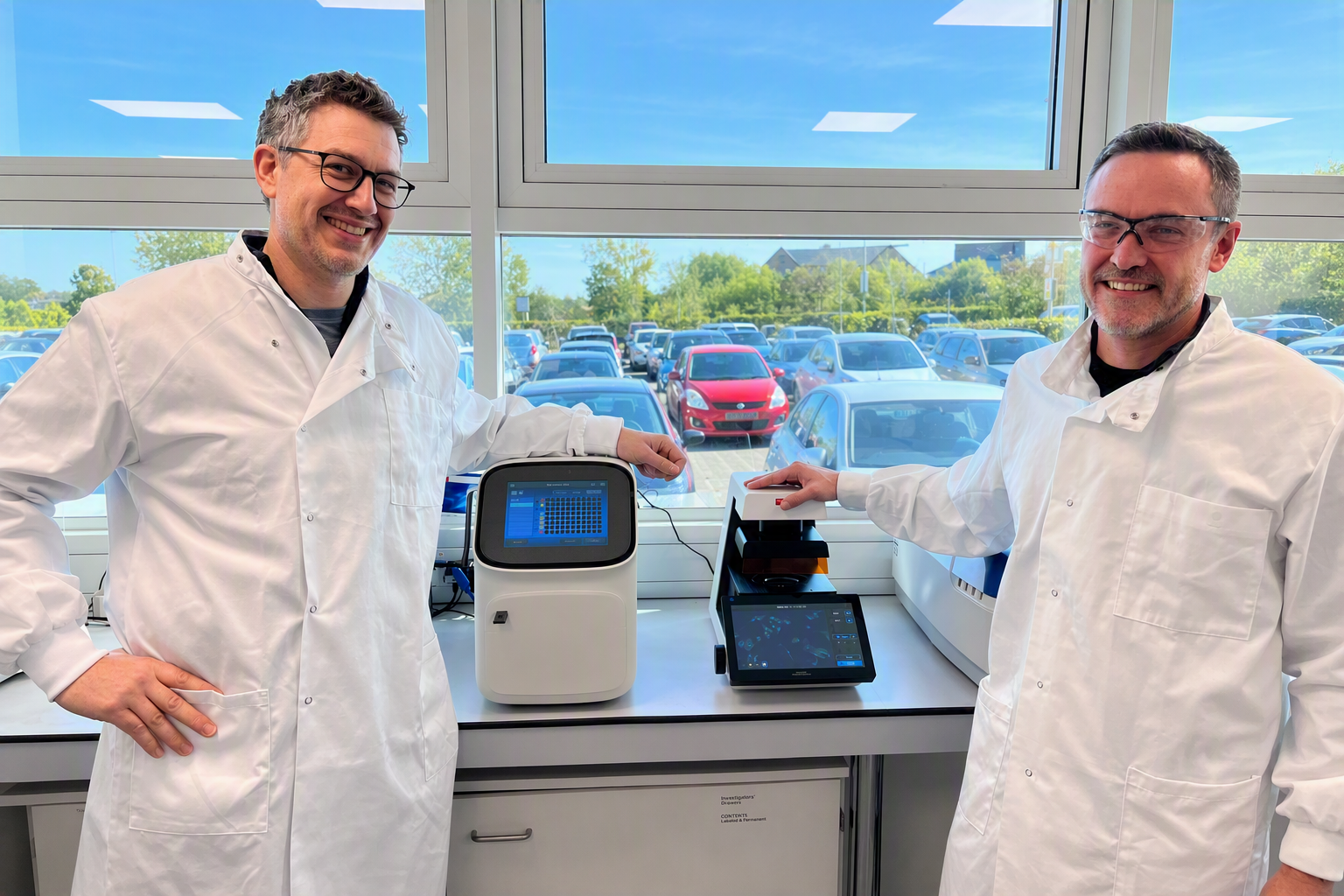
A new cancer diagnostics start-up company, 4fold Bioscience, has chosen The EpiCentre in Haverhill as the base for its next stage of development. Founded by Duncan Brett and Ollie Miller, the company is developing a low-cost diagnostic platform designed to accurately identify early-stage cancers. It has taken a laboratory bench, plus office space at the innovation centre as it develops its core technology and prototype instrument. Its ambition is to create a fast, affordable system to be used in GP surgeries, pharmacies and community diagnostic centres. Duncan Brett (photo, left) and Ollie Miller (right) said: “We looked at a number of laboratories and incubator facilities in and around Cambridge, but quickly discovered that finding somewhere offering both office space and access to the specialist laboratory equipment we needed was not straightforward. The EpiCentre really stood out. The EpiCentre team were genuinely interested in what we were trying to achieve and were incredibly accommodating.” With meetings increasingly taking place online, they can operate from Haverhill while still accessing Cambridge’s network of investors, lawyers, engineering businesses and life-science expertise.
Helen Earl, centre manager at The EpiCentre, said: “It’s particularly exciting to support a company like 4fold Bioscience at this fundamental stage of their journey, using our facilities to develop an innovative technology from the ground up.”
Delegate numbers up 15 per cent at Cambridge Tech Week
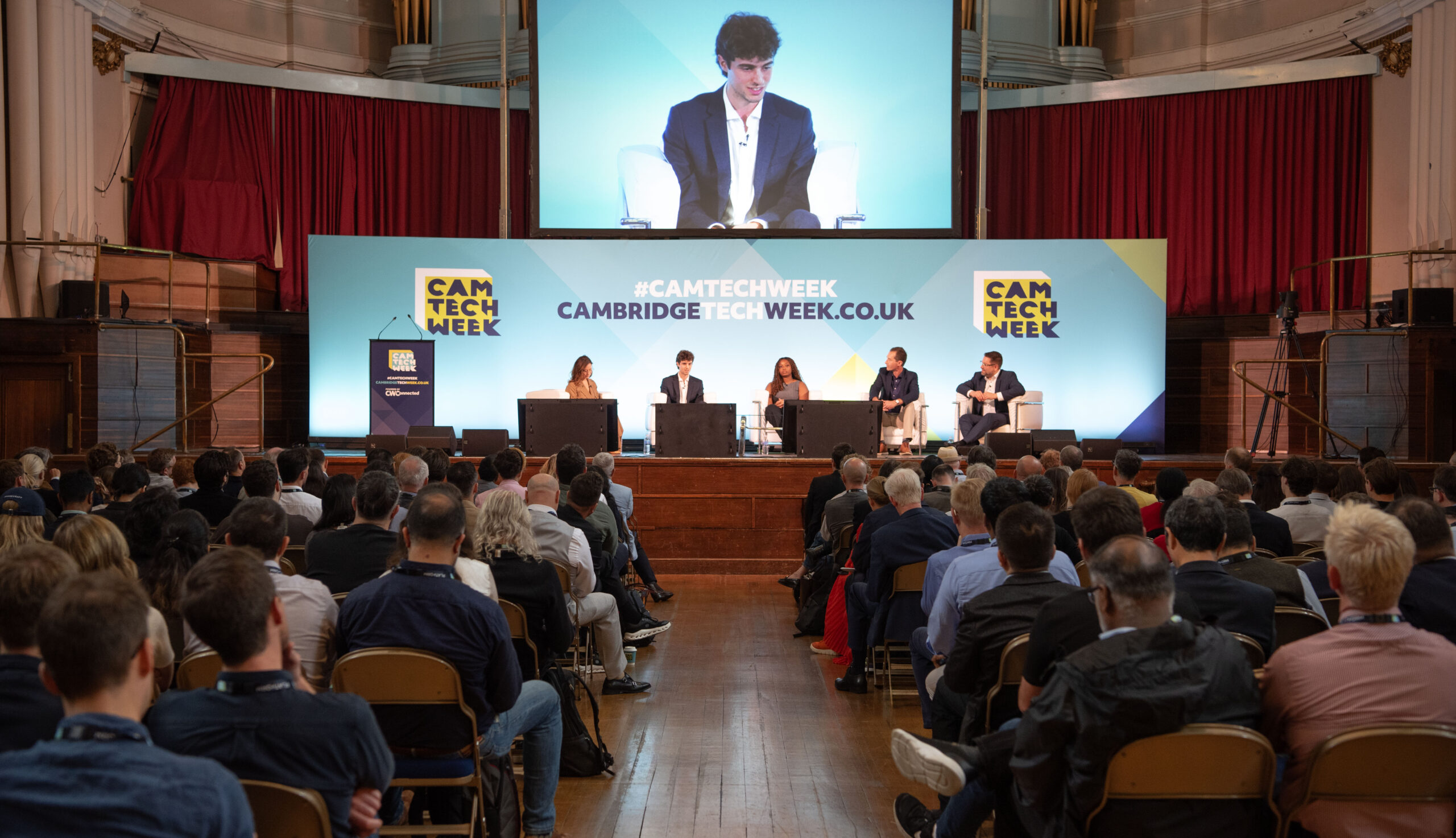
Cambridge Tech Week 2026 earlier this month attracted 1,781 delegates from 52 countries, a 15 per cent increase on last year, as it focused on commercialising deep technology and developing scalable businesses. Held under the theme How Deep Tech Changes the World, the event brought together researchers, founders, investors and businesses to examine artificial intelligence, quantum computing, health tech, med ech, energy, infrastructure and security. Commercialisation, investment and collaboration featured throughout the programme. Innovation Alley at Cambridge Guildhall featured more than 80 emerging companies and scaleups, while the Cambridge Tech Week Pitch Competition was won by Myonerv, which received the £5,000 first prize for its wearable neurostimulation technology designed to help stroke patients regain movement. The programme also examined AI’s energy demands, sovereign computing and dual-use technology. Michaela Eschbach, CEO of CWConnected, said: “We brought together the people, ideas and technologies with the potential to change the world, creating connections and conversations that will continue long beyond the event itself.”
Suffolk businesses join new resilience network
More than 50 businesses attended the launch of the Suffolk Business Resilience Network (SBRN) earlier this month, bringing together organisations from a wide range of sectors. The new network aims to help businesses prepare for, respond to and recover from disruption, while encouraging greater collaboration across Suffolk businesses. Discussions covered emergency preparedness, prevention, response and recovery, alongside the role businesses can play in supporting resilient communities and local economies. The Suffolk Resilience Forum also outlined its work in areas including emergency planning, training, exercising, community engagement and climate adaptation. Becky Heginbotham-Blount, chief resilience officer for the Suffolk Resilience Forum, said the attendance demonstrated “the shared vision to building a more resilient Suffolk.” The network will run a year-long programme of workshops, with the first scheduled for 26 November at the University of Suffolk. Topics will include extreme weather, supply chain disruption, cyber threats and workforce challenges.
Advisory firm takes on 14 trainees in East Anglia

Accountancy and business advisory firm BDO has appointed 14 new trainees in East Anglia as part of an intake of 525 across its UK offices. The latest recruits are joining the firm’s Cambridge and Ipswich teams. More than 50 trainees have joined BDO in East Anglia since 2024, while more than one in four employees across the firm are now undertaking a graduate or school-leaver apprenticeship or industrial placement. BDO has also expanded its early engagement programme, reaching more than 8,200 young people this year through events, social mobility programmes and virtual work experience. Peter Harrup, regional managing partner at BDO in East Anglia, said: “With the skills shortages and labour market conditions businesses are facing today, it’s never been more important to offer meaningful career opportunities to help develop the leaders of the future.”
Photo: A trainee induction day at Wembley.
- The bond market’s comeback
- Discover more insights in Brown Shipley’s latest market and investment update: Markets and Investment Update | 28 September 2026
- Investing puts your capital at risk