
Worries mount over impact of new employers rights law

The majority of employers, some 91 per cent, are not fully-prepared for the new Employment Rights Act, according to a survey from law firm Birketts. It says that the most pressing concern for employers, cited by 70pc of respondents, is the introduction of unfair dismissal rights after six months’ service combined with uncapped compensation. Other concerns include the guaranteed hours contracts and new protections for zero-hours workers in the new act (13pc), enhanced trade union rights and changes to industrial action rules (8pc), restrictions on ‘fire and rehire’ practices (5pc) and ‘day-one’ rights to statutory sick pay & expanded family leave entitlements (4pc). Most employers also say they will “almost certainly” revise their current probationary provisions ahead of the deadline of 1 January next year. Matthew Newnham (photo), head of employment and partner at Birketts, said: “Our research shows that while most employers recognise the significance of the Employment Rights Act 2025, many are still only part of the way towards being fully prepared. The scale of change is unprecedented, and organisations are having to navigate multiple complex reforms at once – often while balancing day-to-day operational pressures.” He added: “What stands out in particular is the level of concern around unfair dismissal reforms. The move to full protection after six months, coupled with uncapped compensation, represents a fundamental shift in risk for employers and will require careful review of recruitment, performance management and dismissal processes.” Birketts has developed a ERA 2025 Audit tool to support employers at different stages of compliance which is available via the firm’s Employment Rights Act hub.
Business confidence dives but many firms still planning to recruit
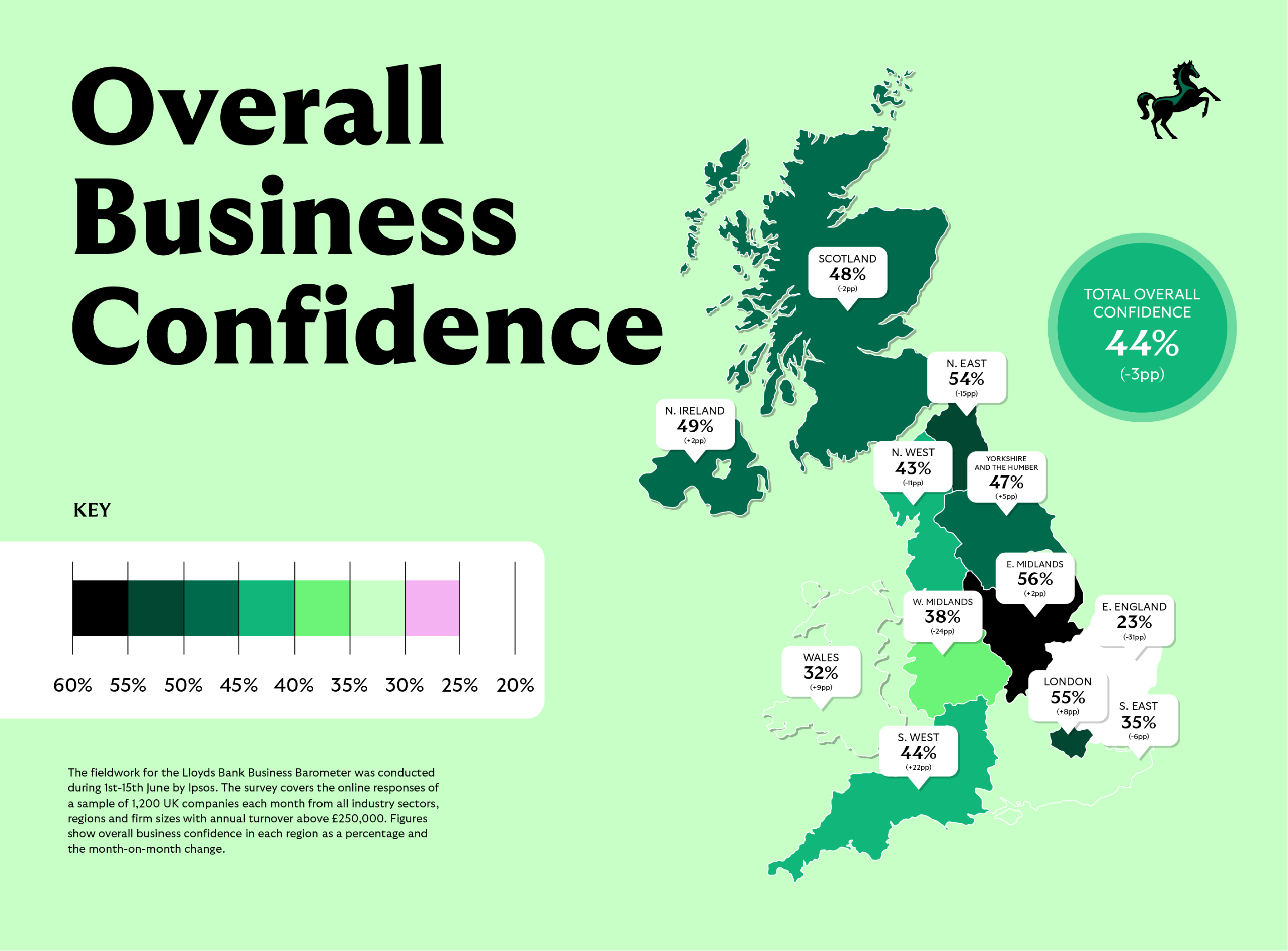
Business confidence in the East of England plunged by 31 points in June to 23pc but many firms are seeing strong customer demand and are still planning to hire staff this year, according to a business barometer survey from Lloyds. Firms in the East reported lower confidence in both their own trading outlook and the prospects for the economy. But firms in the region saw strong customer demand (72pc) and increased investment in capacity & tech (44pc) as drivers of confidence in their own trading outlook. A net balance of 37pc of businesses in the region expect to increase staff levels over the next year, down seven points on May. Kirsty Sadler, regional director for the East of England at Lloyds, said: “This month’s decline in confidence shows there are broad economic challenges that firms in the East of England are having to grapple with. But with summer now here, many will be entering a peak season as holidaymakers flock to the East coast, so there will be opportunities for our businesses to capitalise on. It’s encouraging to see East of England businesses feeling confident in some areas of their own trading outlook.” The survey, which was taken in the first two weeks of June ahead of the recent fall in oil prices, showed that business confidence nationally fell three points to 44pc.
Farmers urged to focus on growing food in ‘quality not quantity’

Farmers in the East of England will need to focus on quality rather than quantity and grow food with higher nutritional value and protein content in the future, according to a report from Savills. The property firm’s Spotlight on Food report identifies a growing shift towards better – rather than more – food with ‘tomorrow’s table’ evolving to exclude ultra-processed foods. “The UK food system cannot rely on volume alone. Future resilience will depend on how well the sector adapts to climate risk, responds to changing consumer demand and builds stronger, more transparent supply chain relationships. In practical terms, that means a renewed focus on quality, nutritional value and provenance,” said Tim Frost, associate director at Savills in Cambridge. The review suggest farmers review crop suitability, invest in irrigation and water infrastructure and adopt production systems to improve long term resilience
Loan secured for £16 million refurb of Cambridge student accommodation space

A £16m loan has been completed for the refurbishment of an early 150-bed purpose built student accommodation scheme in Cambridge by a development finance lender, Atelier. The loan, structured over 20-months, will fund work to turn the existing accommodation into a modern student living environment, with en-suite beds and amenities such as dedicated study spaces, a residents’ lounge, and a cinema room. The borrower is reported to be a Bath-based property developer Rengen Developments. With growing student numbers at both the universities of Cambridge and Anglia Ruskin, the development aims to meet growing demand. The first 50 beds are set for occupation for the 2026/27 academic year and the remaining 100 by next January. Avi Miller, credit director at Atelier, said: “With strong fundamentals underpinning the Cambridge student accommodation market and a clear strategy for delivery, we look forward to supporting the borrower as they bring this development forward.”
Briefly…
Students offered places to gain ‘insights’ into careers in accountancy

Accountancy firm BDO is offering more than 10 places to young people based in East Anglia this summer as part of an expanded national programme to improve access to careers in accountancy. The firm will host two in-person ‘insight days’ in July across its Ipswich and Cambridge offices, giving 14 school, college and university students aged 16 and over the chance to gain experience and learn about a career in professional services. Nationally, the scheme has more than 1,100 student places available. It follows the firm’s report Young Minds 2026: The Unequal Advantage which showed gaps in access to work experience, careers advice and professional networks, specifically for young people from lower socio-economic backgrounds. Peter Harrup (photo, right), regional managing partner at BDO in East Anglia, said: “We’re incredibly proud that our own trainees are leading these sessions. It’s important that students can see relatable role models and hear first-hand experiences from people at the beginning of their own career journeys.”
Partner promotions in Cambridge at professional services firm

Deloitte has boosted its senior ranks in Cambridge with two new partner appointments. Paul Adkins, who joined the firm in 2005 and leads its private audit business in Cambridge and the emerging growth business for A&A nationally, has become an audit and assurance partner. Sam Lidgett, who joined as a graduate in 2010 and is part of the national private equity portfolio tax leadership team, takes on a partner role in the firm’s tax and legal division. Francis Cousins, practice senior partner, Deloitte South East, said: “It is an exciting time to be based in the region, as Deloitte embraces the opportunities that exist in sectors such as AI and life sciences. We’re committed to ensuring our people develop their careers in conjunction with the important projects we’re involved in.” Deloitte has also promoted four of its Cambridge-based people to director: Jack Bartsow (tax and legal), and Callum Smithson, Jon Payne and Olivia Brown (all audit and assurance).
Photo: Fran Cousins, Deloitte practice senior partner with Sam Lidgett (centre) and Paul Adkins.
- On oil, tech and volatility
- Discover more insights in Brown Shipley’s latest market and investment update: Markets and Investment Update | 29 June 2026
- Investing puts your capital at risk