Land prices hot up as investors go back to nature

Farmland prices in the East have continued to climb in the opening months of this year driven by pent up demand, partly tax-related and from green buyers keen to get involved with initiatives such tree-planting and regenerative farming. A quarterly farmland price index from Savills shows that ‘all types’ of farmland in East Anglia – pasture and arable – averaged £9,747 an acre at end-March, up 15.4 per cent on a year ago and above the national average of £7,939 an acre. Prime arable land values in the East rose by 15.6 per cent over the year to an average of £10,563; the highest since March 201 the price peaked at slightly over £11,000 per acre. Poorer quality arable land, which appeals to environmental buyers, has seen one of the biggest increases in value in the East – rising 28 per cent to average £7,808 an acre. Poor livestock land has also jumped recently. Oliver Carr, associate director in Savills rural agency team, said: “A backlog of buyers motivated by capital gains tax rollover relief remain a particular force in the market.” He added: “We also continue to see strong interest from buyers in the market for high quality commercial farmland, while poorer quality land continues to attract those who have an interest in delivering nature-based solutions such as tree planting, biodiversity net gain, natural capital, and regenerative farming. The latter are now a significant influence on the market and often backed by substantial funds.” During the first three months of this year 16,700 acres of farmland were publicly marketed across Britain, the most since 2016 and up 30 per cent on the period last year. Around 2,925 acres of land has been publicly marketed in the East 1,391 acres in Norfolk, 1,073 acres in Essex and 461 acres in Suffolk and with more expected to launch over the spring.
Photo: St John’s Farm in Beachamwell in Norfolk, for sale with a guide price of £17m.
Workforce challenges hamper region’s mid-sized business
Workforce issues, such as recruitment and retention costs, skills gaps and a shortage of workers emerge as the biggest challenge facing mid-sized businesses in the region in the next six months, according to a survey of the sector. More than a quarter of firms ranked workforce challenges as the biggest issues they face. BDO LLP’s bi-monthly Rethinking the Economy survey found that the biggest areas of concern for East Anglia businesses is recruitment of entry (70%) and lower managerial levels (70%). In response, it says firms intend to take significant steps to address workforce challenges over the next six months and over the next five years, many businesses in the region plan to invest in upskilling their existing workforce (30%) and take action to reverse the slide in the number of over 50s workers. Peter Harrup, partner and head of East Anglia at BDO, said: “Time and again over the last three years, we have seen regional businesses thinking outside the box when faced with growing pressures. Workforce challenges are no different, with businesses offering specific incentives targeted at attracting more diverse talent, opportunities for existing staff to upskill and retain, as well as recruiting more staff through trainee schemes or apprenticeships. The landscape has changed considerably, and a significant number of businesses have flexed to adapt to it.”
Briefly…
Start-ups on the rise in the region…along with insolvency activity
East Anglia has seen a significant increase in new busiuness start-ups but also a substantial rise in insolvency-related activity, according to restructuring trade body R3. It points to a 17 per cent increase in the number of companies set up in the region since the beginning of the year, rising from 7 502 in January to 8 799 in March. Meanwhile bad debts on the books of East Anglian businesses, fell to 178 in March from 272 in January. But there has also been a sizeable increase in insolvency-related activities in the region since the beginning of the year. The number, which includes liquidator and administrator appointments as well as creditors’ meetings, rose by 78 per cent between January and March of this year. R3 Eastern chair Alistair Bacon, founding principal at AMB Law in the region, said: “This R3 report reveals how challenging it is for local businesses to survive and grow in this current climate. While the increasing number of start-ups in the region is positive, as are the indications of improving cashflow, we are still facing huge economic hurdles.”
Interest in Cambridge for business events ‘soars’ as convention bureau marks 25th anniversary
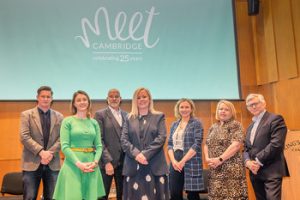
Interest in venues in Cambridge for business events has recovered to a higher level than before the pandemic, according to speakers at an event held last week to mark the 25th anniversary of Meet Cambridge, the convention bureau. Gavin Flynn, senior bursar at Downing College and chair of Meet Cambridge, said: “After the challenges of the pandemic when the events industry was badly bruised, it’s wonderful to see that Meet Cambridge and its member venues have not only weathered the storm but that interest in Cambridge as a destination for business events has soared to greater levels than pre-Covid.” Ninety nine sector professionals attended ‘Events: Matters Arising’ at King’s Collegewhich included a panel session, with high-profile industry players debating issues facing the sector. Sustainability, impact and legacy emerged as the key challenges and opportunities facing the industry. Recommendations included: starting to track event sustainability possibly using a carbon calculator; the need for greater awareness of career opportunities in the sector among young people; and how event organisers should review programme content to ensure greater diversity and inclusion, involving local speakers where possible. Owned and funded by the Cambridge colleges, Meet Cambridge was set up as Conference Cambridge to offer a single central enquiry point for anyone seeking to host an event at a college. Today it employs six staff and deals with around 3,500 enquiries each year, worth some £20m to its 53 member venues. Judith Sloane, head of Meet Cambridge, added: “Our role as the convention bureau is constantly evolving and we can’t rest on our laurels. Organisers approaching us today are not only requiring help with finding a venue, many need additional support with running their events.”
Meet Cambridge’s 25th anniversary, panel (l-r) : Martin Fullard, The Business of Events; Madalina Marincas, Opening Doors & Venues; Chris Skeith, Association of Event Organisers; Judith Sloane, Meet Cambridge; Emma Cutting, Cambridge Institute for Sustainability Leadership; Sandra Eyre, The Meetings Industry Association; and Nick Milne, Robinson College.
Recycling firm Sackers amongst five Suffolk firms to win Kings Award for Enterprise.

Suffolk-based recycling business, Sackers has won the Kings Award for Enterprise, for International Trade which acknowledges ‘outstanding short-term growth of international trade’. A confirmation stated: “the last few years have been a challenging time for businesses and this achievement is testament to the resilience you and your staff have shown throughout these unprecedented times”. Sackers CEO David Dodds said: “We are over the moon with this recognition. We have faced some incredibly challenging times over the last few years, so to be able to achieve growth of this level, shows that our growth strategy and investment has been the right decision.” Founded in 1923, Sackers is still a family-owned company but has grown into a large metal and waste recycling business, with a turnover over £60 million and 100 employees and which exports much of the metal it extracts from waste, cables, scrap vehicles and machinery to countries like India and China,
In all, five Suffolk businesses won the King’s Awards for Enterprise 2023. The others are PCE Automation (Beccles) – King’s Award for Innovation and the second award win in three years, for the company which is at the forefront of UK automation.Purple Line (Wherstead, Ipswich) – King’s Award for International Trade; the company is a leading manufacturer of recreational vehicle accessories and self-inflating camper trailers. Coracle Online (Newmarket) – King’s Award for Promoting Opportunity through Social Mobility; the EdTech company has a mission to create a world where everyone can access education. Pump Street (Orford & Rendlesham) – King’s Award for International Trade; founded in 2010 by father and daughter team Chris and Joanna Brennan, the business is an award-winning bakery and craft chocolate maker. Lady Clare, Countess of Euston, H.M. Lord Lieutenant of Suffolk, said: “These are The King’s first Awards for Enterprise and how delighted we all are how delighted we all are that the outstanding winners in Suffolk represent all that is best about business excellence here.”
Photo: Sackers CEO David Dodds
Food and drink producers in Norfolk and Suffolk told sector is ‘perfect’ for entrepreneurs
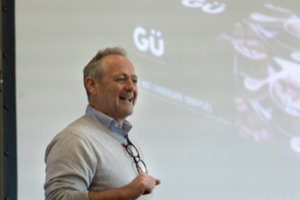
Starting a food or drink business is perfect for entrepreneurs and start-ups thanks partly to the relatively low cost of entry and the role of large supermarkets, delegates were told at an event aimed at helping drive growth in the sector in Norfolk and Suffolk. Speaking at the recent Nourish: Food and Drink conference hosted by the University of East Anglia’s food innovation cluster, James Averdieck (right), founder of the dessert brands Gü and Coconut Collaborative, said: “We launched Gü in May 2003 with £50k and it was a complete disaster but (eventually) sold it for a lot of money. You’ve got to be optimistic, and resilient and take action.” He continued: “The structure of the food industry in this country is perfect for entrepreneurial businesses. You’ve got about six large supermarket chains that are all really focused on the consumer and bringing innovation and everything else. And although there are not easy to deal with, having worked in France and Germany and a lot of recently in the US, this country is …the best place on Earth to start a food business…” Over 120 local food and drink producers attended the conference, which is part of the Broadland Food Innovation Centre project, aimed at driving innovation and growth the sector in Norfolk and Suffolk.
Biotech company wins grant to develop reusable food packaging
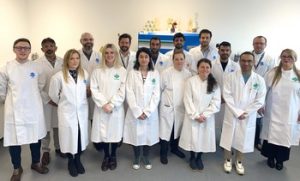
CodiKoat, a biotech company based at The EpiCentre innovation centre in Haverhill, has won a £330,000 UK Research and Innovation grant to fund the development of a new antimicrobial reusable food packaging solutions. To be called ‘Codipac’, the project aims to reduce the environmental impact involved with need for high temperature washing or chemical sterilisation for typical reusable food packaging. CodiKoat will work with supermarkets and consumers to assess the viability of an alternative to single-use packaging. New CodiKoat CEO Blake Gudgel said: “We are delighted to have been successful in this latest funding application to Innovate UK, who have been an essential partner to the ongoing growth and innovation at CodiKoat.” To date, CodiKoat has secured all eight grants that it has applied for from Innovate UK, with over £2.1m in grant funding received in under three years.